What the Numbers Actually Say: A Technical Guide to Game Mechanics on
What the Numbers Actually Say: A Technical Guide to Game Mechanics on MBA66 Singapore Every online casino game has an invisible layer of mathematics governing what happens on screen. For Singapore pla...

What the Numbers Actually Say: A Technical Guide to Game Mechanics on MBA66 Singapore
Every online casino game has an invisible layer of mathematics governing what happens on screen. For Singapore players operating in the SGD market, understanding that layer — even at a surface level — changes how you approach deposit decisions, bet sizing, and game selection on MBA66. This article is a technical walkthrough of the three mechanics that matter most: slot return structures, blackjack expected-value calculations, and how demo sessions translate (and don't translate) into real-money play.
Photo by Aidan Howe on Pexels
Slot Return Structures: RTP, Volatility, and the Hit Frequency Nobody Talks About
The two numbers every slot player sees are RTP (Return to Player) and volatility. RTP is the theoretical percentage of total wagers a slot returns to players over a long session. A 96% RTP slot returns SGD 96 for every SGD 100 wagered, on average, across millions of spins. MBA66 integrates games from providers including Pragmatic Play, JILI, Nextspin, Fa Chai, and Spade Gaming — each with distinct RTP profiles that matter more than most players realize.
RTP is a long-run figure. It does not mean you get SGD 96 back from a SGD 100 session. In a 100-spin session, variance dominates the math. That's where volatility enters.
Volatility describes the distribution of wins. Low-volatility slots produce frequent, small payouts. High-volatility slots go through extended dead stretches before delivering a single large win. For SGD players managing a weekend bankroll, medium-volatility games often provide the most playable balance — enough action to stay engaged without burning through a deposit in twenty minutes.
Hit frequency is the third metric, and it's the one most often missing from marketing copy. It measures how often any winning combination lands, expressed as a percentage of total spins. A slot with 35% hit frequency produces a win roughly once every three spins. That sounds good until you realize most hits are sub-stake — a SGD 0.50 win on a SGD 1.00 bet is still a net loss for that spin.
This is the slot balanced read that separates informed players from those chasing patterns that don't exist.
Blackjack Math Underneath: Expected Value and the Cells That Feel Wrong
Blackjack is the only game on the casino floor where the player can mathematically eliminate guesswork from every decision. Basic strategy — the optimal action for every player total against every dealer upcard — is derived from expected value (EV) calculations run across hundreds of millions of simulated hands.
EV for any action is computed as:
EV(action) = Σ [P(outcome) × payoff(outcome)]
For every possible dealer ending hand, multiply the probability of that outcome by the payoff, then sum across all outcomes. The action with the highest EV is the mathematically correct play.
Consider hard 16 against a dealer 10. This is the hand that trips up most players. The temptation is to hit — a 10-value card busts you, but so does standing with 16 against a 10. The chart says stand. Let's look at the math.
When you stand on hard 16 against a dealer 10, the dealer busts approximately 21.4% of the time and makes a standing hand 17–21 about 78.6% of the time. Standing loses more often than it wins, giving a negative EV. Hitting introduces a complex distribution of outcomes — a 10-value busts immediately (~30.7% of the deck), but drawing lower cards keeps you alive with a chance to improve. When the full distribution is computed, standing still edges out hitting by a small but real margin because dealer-bust math at 10 is simply unfavorable for the player.
This is the blackjack math underneath the chart — the reason surrendering hard 16 against a dealer 9, 10, or Ace is the correct play despite feeling like giving up. Every cell on the basic strategy chart is an EV calculation. When a move "feels wrong," it's usually because the player is reacting to a single outcome rather than the full distribution.

Photo by Pavel Danilyuk on Pexels
Demo Sessions: What the Practice Mode Actually Reveals
Most Singapore players on MBA66 use demo or fun-play mode before depositing. That's a reasonable approach — but there's a specific trap embedded in it that demo-mode advertising never mentions.
Demo mode uses the same game engine as the real-money version. Same RTP. Same volatility. Same bonus rollover and spin trigger probabilities. Provider-side, nothing changes between demo and real. What changes is the psychological relationship between you and your stake.
When SGD 0.10 per spin feels weightless, you spin faster, take more risks, and your session behavior diverges from how you'll actually play under real financial pressure. The slot demo walkthrough most experienced players run is useful for one thing: learning the bonus round mechanics and understanding the base-game pulse before real money is on the table.
Use demo to map the game. Learn what triggers the free spins round. Note how often the base game produces sub-stake hits versus meaningful multipliers. Watch for the point in a session where the game "wakens" — the pattern that signals a bonus cycle is approaching. These observations transfer to real-money play.
Do not use demo results as a predictor of outcomes. The spin trigger mechanism is independent on every single spin. A slot that paid nothing for 60 demo spins can pay a 500x multiplier on spin 61 — and so can one that just paid a 200x bonus. The game has no memory.

Photo by Kendall Hoopes on Pexels
Bonus Rollover: The Math That Determines Whether a Promotion Is Worth It
The wagering requirement — or bonus rollover — is the part of any deposit promotion that determines its actual value versus its headline appeal. MBA66 offers welcome and first-deposit promotions, but the fine print matters.
Most rollover requirements state that bets must be turned over a specified number of times before withdrawal is permitted. Critically, not all game types contribute equally. In blackjack and baccarat, opposite bets (Banker + Player, Big + Small) typically do not count toward rollover. Roulette bets covering more than 30 numbers, or paired opposite bets like red/black, are also commonly excluded.
This means if a player claims a bonus and attempts to clear it exclusively through baccarat banker bets — a strategy some players employ for its near-50% win rate — those bets may not advance the rollover at all. Understanding contribution rates before claiming a promotion prevents the common frustration of completing a large apparent bonus only to find rollover at 0%.
For SGD players targeting live dealer games on MBA66, the practical implication is this: if you plan to clear a bonus through blackjack or baccarat, use the main floor bets (player, banker straight, big/small individually) rather than compound positions, and track your contribution rate against the remaining requirement.
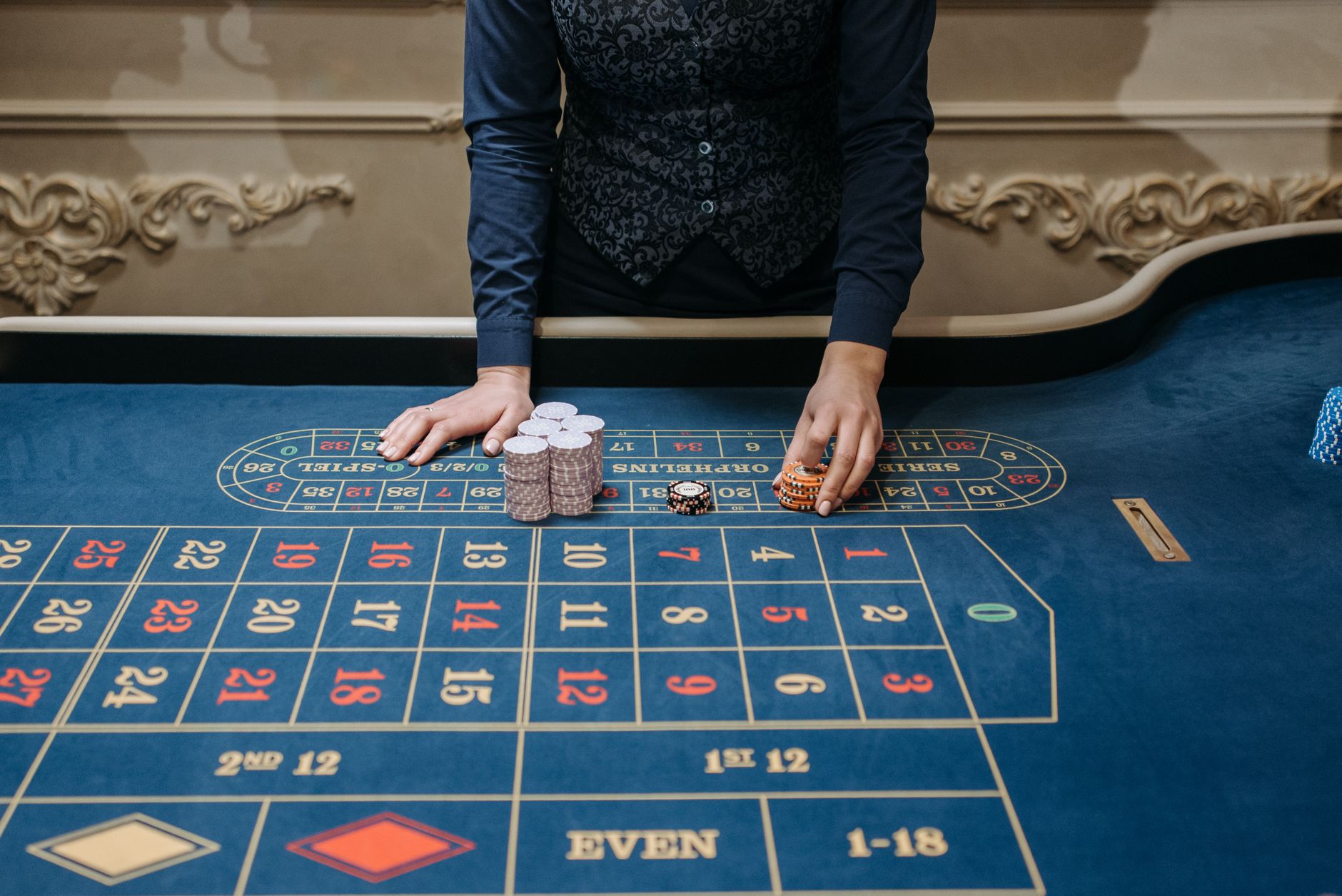
Photo by Pavel Danilyuk on Pexels
Live Dealer vs RNG: The Game Info That Changes Your Strategy
MBA66's live dealer tables stream from Evolution and other Asian studios in real time, with professional human dealers. The live dealer games — baccarat, blackjack, Dragon/Tiger, roulette, and Sic Bo — operate with physical cards and real equipment. The RNG-certified live games differ from pure RNG (random number generator) table games in one critical respect: each shoe has a knowable composition that skilled card-counting or pattern-tracking approaches can theoretically exploit.
For the overwhelming majority of players, that exploitation is not realistic. But the live dealer environment introduces something RNG tables cannot: dealer bust rates that vary by shoe composition. In blackjack, when the shoe is rich in 10-value cards and Aces, the dealer's bust rate drops and the player's expected value rises. This is why some experienced Singapore players track the ratio of high to low cards in the shoe — a practice drawn from blackjack's mathematical framework, not superstition.
For players not running a count, the practical takeaway is structural: live dealer tables on MBA66 offer the same basic strategy decisions as RNG blackjack, but the real-time environment adds a human element (dealer pace, shuffle timing, table etiquette) that influences session feel in ways no game info panel captures. Demo play, which works perfectly for learning RNG slot mechanics, has zero applicability in a live dealer context — the live environment cannot be replicated in practice mode.
FAQ
How do I verify a slot's RTP on MBA66?
Each game on MBA66 has an info panel accessible from the game lobby tile. The panel lists the theoretical RTP for that specific build. Confirm the RTP there rather than relying on provider marketing materials, as operator builds can vary.
Is basic strategy blackjack mathematically sound on every MBA66 table?
Basic strategy charts are rule-variant. The optimal decisions for a single-deck game differ from those for a multi-deck shoe. MBA66's live dealer blackjack uses standard multi-deck rules, which means the standard basic strategy chart applies — but always confirm the specific table's rules (dealer hits or stands on soft 17, allowed doubles, surrender availability) before sitting down.
Do demo sessions help with live dealer games?
No. Live dealer games cannot be played in demo mode — they are real-time streamed experiences with human dealers. Demo modes exist exclusively for RNG slots and virtual table games. For live dealer preparation, learn the rules and optimal strategy for the specific game type, then start with minimum bets to build comfort with the pace.
Why do my demo sessions feel luckier than real-money sessions?
Demo mode removes financial consequence from each spin, which changes both your behavior and your perception. The RNG governing the game is identical, but your risk tolerance, bet sizing, and session length differ dramatically between demo and real-money contexts. Use demo to learn mechanics, not to predict results.

Photo by Pavel Danilyuk on Pexels
Report complete.
MBA66 · Analytical Archive